Stoak Journal
Architect vs architectural designer vs draftsperson
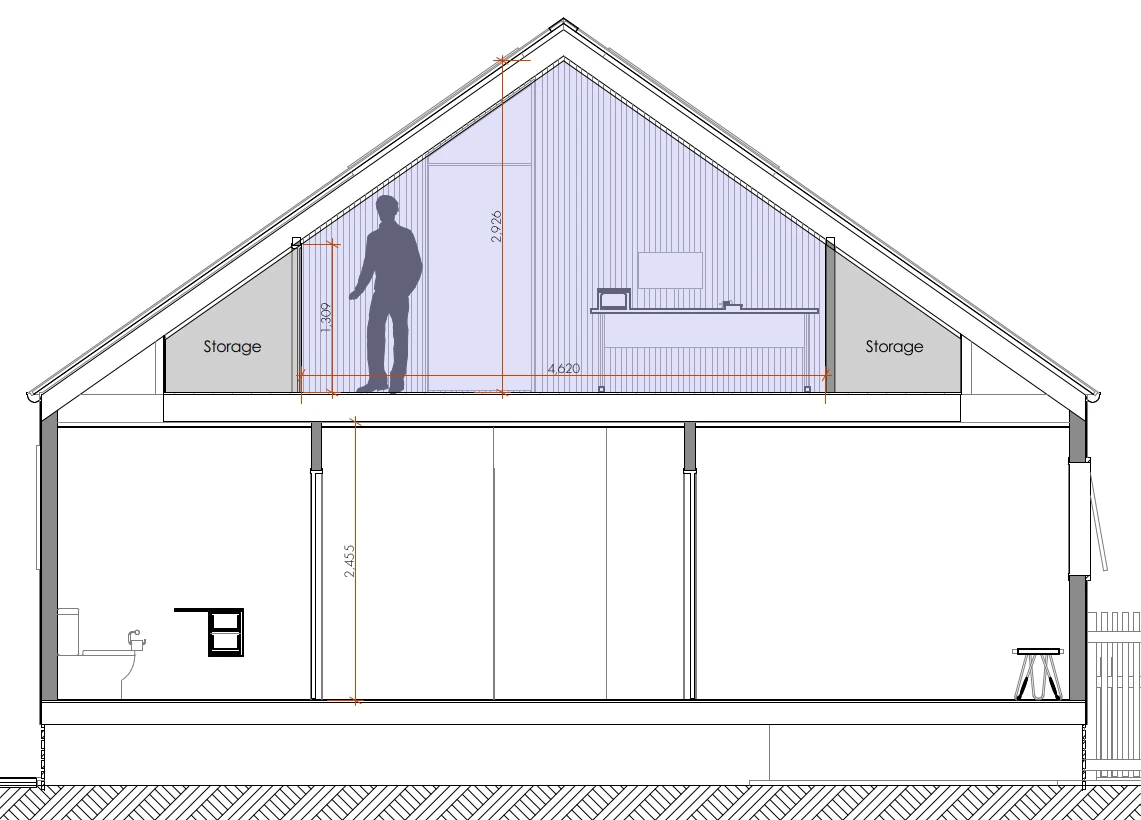
If you're shopping around for someone to design a house in NZ, you'll see three labels: Architect, Architectural Designer and Draftsperson. They sound similar, they all draw houses, and the fees are all over the place. Here's what each one actually means.
The short version
| Title | Training pathway | What they design | Licence to certify |
|---|---|---|---|
| Registered Architect | University (Master's) + supervised practice | Anything, including large commercial | NZRAB-registered (Architects Act 2006) |
| Architectural Designer | Apprenticeship-style, learning by doing on real projects | Residential + small-to-medium commercial | LBP Design 1, 2 or 3 |
| Draftsperson | Varies — often industry training, often none | Drawings only | None required; can't certify Restricted Building Work |
For a residential project — new build, alteration, re-clad, relocation — any of the three can produce drawings. What's actually different is the training pathway, the design-vs-documentation balance, and who can certify Restricted Building Work on the consent.
Architects
Architects come through a university pathway — typically a five-year Master of Architecture, then a couple of years of supervised practice, then registration with the New Zealand Registered Architects Board (NZRAB). Many are also members of Te Kāhui Whaihanga New Zealand Institute of Architects.
The pathway is design-art focused. Building Code knowledge, structural understanding, weathertightness detail and how things actually go together on site vary a lot by school and what the architect did once they graduated. Some architects have grown into exceptional all-rounders who handle the technical side as comfortably as the design side. Others stay closer to design and partner with draftspeople or technical staff for the detailed delivery — you'll see practices structured both ways.
Scope of practice is unrestricted — an architect can design anything from a small house to a hospital. The architect's title carries weight on larger commercial work, public buildings, and projects where author-architect cultural cachet matters to the client.
Architectural designers
Architectural designers come through a different pathway — apprenticeship-style, learning by doing on real projects from day one. There's no university requirement; what counts is who you trained under, how thoroughly you learned each part of the work, and whether you stayed curious enough to keep getting better.
Quality across the profession depends heavily on the mentor and the passion. A designer who came up under a thorough lead and stuck with it long enough to own the whole project — concept, design development, working drawings, consent, site coordination — develops a complete and practical skill set. Site experience makes the drawings better. End-to-end ownership means the design knows what the build looks like from the inside.
The licensing pathway is the Licensed Building Practitioners (LBP) scheme. Three classes:
- Design 1 — limited scope; common for builders who do simple plans.
- Design 2 — covers Restricted Building Work on residential and small-to-medium commercial buildings.
- Design 3 — covers larger Importance Level 3 buildings (schools, hospitals, etc.).
The LBP scheme classifies three categories of Restricted Building Work — primary structure, weathertightness, and fire safety systems. An LBP designer with the right class designs and certifies these themselves and provides a Certificate of Design Work for the Building Consent application. No separate sign-off needed.
My position, honestly: an architectural designer with the right experience can deliver the same outcome as many architects on most residential briefs — often a more complete package, because the technical depth was built in from the start rather than learned post-graduation. The drawings know the build; the QS software Stoak uses is part of the workflow; the responsibility is one-person from concept to consent.
I hold LBP Design 2 plus a Carpentry LBP from my earlier trade work.
Draftspeople
A valid and important role, distinct from "architectural designer" even though the names get used interchangeably.
A draftsperson handles drawing production — typically working drawings, often working under an architect or a senior designer. The role exists across industries beyond residential design (engineering, structural, mechanical, marine), and within residential it's where a lot of the technical drawing-set production gets done.
Draftspeople aren't always LBP licensed, and the role isn't focused on design ownership. They aren't typically the person making the design decisions on the home — they're the person turning those decisions into the drawings the council and the builder need. Many are excellent at it.
Where it matters legally: a draftsperson cannot certify Restricted Building Work. So drawings produced by a draftsperson alone need an LBP Design 1/2/3 to sign them off as the design author. That signoff costs money, and on some projects it costs more than the saving from going draftsperson-only.
Which one for my project?
For most residential projects — single-storey to three-storey homes, alterations, re-clads, relocations, multi-unit at small to medium scale — an LBP architectural designer is the typical answer.
For a project above three storeys, a public building, or larger commercial work, you want a Registered Architect.
For internal cosmetic work that doesn't touch Restricted Building Work, a draftsperson can be fine and often cheaper.
How to compare fees (and why fees aren't the whole question)
Architect fees are generally higher than architectural designer fees — but not always, and fees don't always correlate with skill. Fees climb with reputation and the type of clientele a practice has built; they don't necessarily climb with technical capability. There are plenty of senior architectural designers turning out work that would cost twice as much from a high-profile architect's office, and plenty of architects who are genuinely worth the higher fee for what they bring.
Realistic NZ ranges for design + consent documentation only (ex everything else):
- Architectural designer: 3–8% of construction. Simple new builds 3–5%, designer briefs 5–7%, renovations 6–9%.
- Registered architect: typically 9–12% for full service.
The 6–12% number you'll see online for "architect fees in NZ" tends to lump in engineering and council fees that aren't actually part of the design fee. Be careful with it.
The more important question than fee is who you can talk to honestly about your home. The best way to choose:
- Word of mouth — ask people who've been through it whether they'd use the same designer again.
- Testimonials and Google reviews — look for specifics ("designed exactly what we wanted", "the builder said the drawings were the best he'd seen") rather than vague praise.
- View completed work — does the home you're shown feel resolved, or compromised? Does it work for the people living in it?
- Ask to see sample plans — a real consent set, with details and specifications. The level of resolution there tells you what your build will run on.
The most important thing on a project that's going to take twelve months and cost most of what you've got is finding someone you can talk to honestly, who's *your* advocate through it.
One last thing
Although those are the general ways these positions work, there are definitely better and worse versions of all of them.
I've seen plans from architectural designers that I'd have thought a child had drawn — and that should not be able to work in the industry. I've seen terrible designs from architects that are unbuildable and have to be completely changed by engineers.
But I've also seen amazing examples of both.
So, whether you choose Stoak Architecture or not for your project, make sure you do your research before deciding on the designer to work with.
Set under the Building Act 2004 + Building Regulations 1992
- 01
Acceptable Solutions
Most prescriptive · Deemed-to-comply
MBIE-published prescriptive solutions tied to specific Code clauses (e.g. B1/AS1 for Structure, E2/AS1 for External Moisture). A BCA must accept a design that follows the Acceptable Solution as complying with the cited clause.
NZS 3604 is a NZ Standard that's referenced by B1/AS1 — its deemed-to-comply status flows through the Acceptable Solution, not from the Standard itself.
- 02
Verification Methods
Calculation / test-based · Deemed-to-comply
MBIE-published test or calculation methods (e.g. B1/VM1). Also a deemed-to-comply route under s 19 of the Building Act — typically used where a design needs more analytical flexibility than the Acceptable Solution allows but still falls within an MBIE-published method.
- 03
Alternative Solutions
Most flexible · Designer evidences compliance
Anything else that demonstrates compliance with the cited Code clause — specific engineering design, CodeMark-certified products, in-service history, comparison to an Acceptable Solution. A fully legitimate s 19 / s 22 route, just one where the designer has to show how the design complies.
Worth saying out loud
- All three pathways are legitimate. Alternative Solutions aren't "non-compliant"; they're a different way of evidencing compliance.
- All three still go through BCA assessment. The pathway changes how compliance is demonstrated, not whether it's reviewed.
- NZ Standards (NZS 3604, NZS 4229, AS/NZS 1170, etc.) are not Acceptable Solutions. They're referenced by Acceptable Solutions and Verification Methods — that's how their compliance status flows through.
Diagram redrawn by Stoak Architecture. Based on Building Code compliance pathways content from the Ministry of Business, Innovation and Employment, building.govt.nz, licensed under CC BY 4.0. NZS 3604:2011 is published by Standards New Zealand.
Frequently asked
- Do I need a Registered Architect for a residential build in NZ?
- No. For most residential projects an LBP architectural designer with the right Design class can design and certify the work end to end. A Registered Architect is required for some larger commercial work and offers a different professional pathway, but for a single house both deliver the consent drawings council needs.
- What's an LBP Design 2?
- Design 2 is the licence class under the Licensed Building Practitioners scheme that authorises someone to design and certify Restricted Building Work on residential and small-to-medium commercial buildings. Daniel Stowe at Stoak holds LBP Design 2 plus a Carpentry LBP. The licence is verifiable on the public LBP register.
- Can a draftsperson sign off my consent drawings?
- Not on Restricted Building Work. The Restricted Building Work rules require an LBP Design 1/2/3 to provide a Certificate of Design Work for the consent application. A draftsperson can do drawings but cannot certify them — those drawings need an LBP designer to sign off as the design author.
- What's Restricted Building Work?
- It's the work the LBP scheme requires a licensed designer to do or supervise — primary structure, weathertightness, and fire safety systems on residential and small-to-medium commercial buildings. The detail is at lbp.govt.nz/for-lbps/restricted-building-work.
Got a project?
Talk it through with Daniel.
If something here applies to a project you're thinking about, send through a brief — I'll come back to you within one business day.