Service
Everyday New Builds
Practical, design-led family homes — drawn properly so the build runs cleanly.
What "everyday" actually means
"Everyday" is shorthand for the briefs that don't fight the rules — a regular section, a sensible footprint, framing that fits within NZS 3604, joinery off the catalogue rather than custom. None of that means the design gets short-changed. Concept is where the home is decided. Where the kitchen sits in relation to the morning sun, how the entry handles wet boots, whether the lounge opens to the deck or hides from the road. Those are the moves that make the home worth living in once it's built — and they get the same care on an everyday brief as on any other.
How the fee runs
- Concept fee — fixed, set per project type. Invoiced on issue.
- Developed design fee — fixed, set per project type. Invoiced on completion.
- Working drawings — a percentage of the developed design build cost (not the client's initial budget). Locked at proposal — it doesn't track up if the build cost grows during construction.
Live numbers in the sidebar, current with the QS software Stoak uses.
A real example
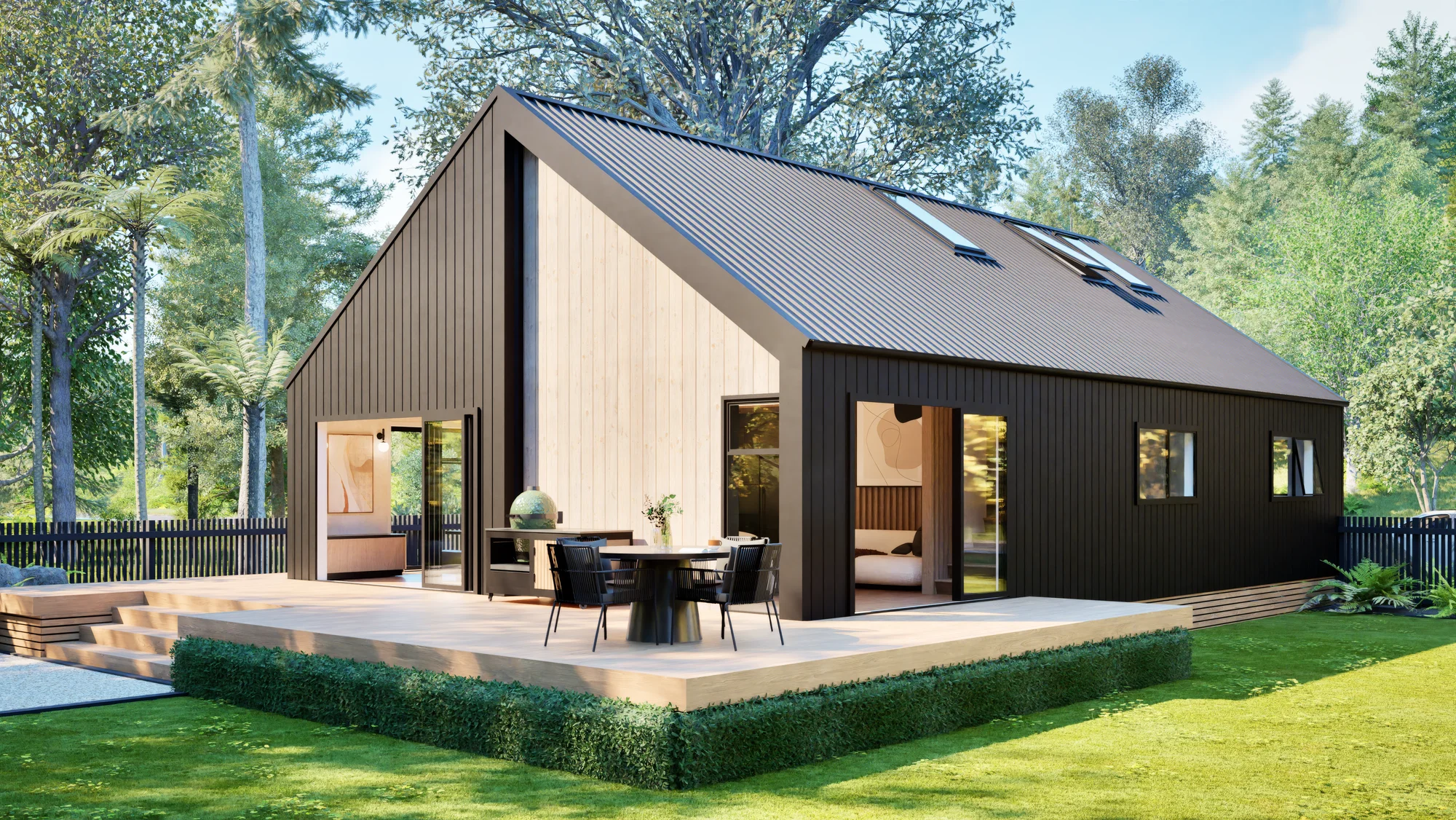
Arcadia Series Summit — a four-bedroom gable-form home with a double-height void over the living space. Designed in partnership with Dufty + Co Builders. Practical layout, clean detailing, the kind of home this service is set up for.
How a new build project runs
-
Site meeting
Site walk-through with you — sun, contour, services, outlook, neighbours. Brief discussed and scope confirmed face to face.
-
Proposal
Written proposal with scope, stage fees and indicative programme. Engagement signed and concept fee invoiced.
-
Concept
Site analysis, plan options, elevations and form studies. Two rounds of revision built into the fee.
-
Client approval of concept
Final concept signed off in writing before we move forward.
-
Concept priced
Concept run through the QS software Stoak uses for an early build cost estimate. You see the number before committing to developed design.
-
Developed design
Design refined to suit the budget — material decisions locked in, joinery sized, structural pattern resolved. Two rounds of revision built into the fee.
-
Developed design priced
Developed design priced again through the QS software so the budget and the design land in the same place.
-
Client approval of developed design and budget
Final design and price signed off — ready for working drawings.
-
Consultant quotes
Engineer, geotech and any other consultants quoted. Working-drawings fee set as a percentage of the developed design build cost and confirmed in writing.
-
Working drawings
Full consent set produced — plans, elevations, sections, details, schedules and specifications. Building Consent application lodged on your behalf and RFIs handled. Drawings issued at the end.
Frequently asked
- How is the new-build fee priced?
- Three stages — fixed concept fee, fixed developed-design fee, then a percentage of the developed design build cost for working drawings. The percentage isn't guessed: at the end of concept the design is run through the QS software Stoak uses for a build cost estimate, and developed design reconciles the design with that number. The percentage sits on the developed design build cost — not the client's initial slider budget. Current figures are live on the sidebar.
- Does the design get the same attention as a designer home?
- Every client gets the same level of attention — the difference is time, not care. A designer new build has more rounds of revision and more complex resolution built into the fee, because the brief is asking for that. The everyday service has fewer revisions and a more direct path through concept. The cost difference reflects the time spent, not the level of care put in.
- Are 3D renders or walkthroughs included?
- Renders are part of the everyday service — the model is in ArchiCAD anyway, so views fall out of the workflow. A real-time 3D walkthrough (a fly-through you can move through yourself) is an optional extra at developed design.
- Do I need an architect or can I use an architectural designer?
- For a single-storey to three-storey residential build, an LBP architectural designer with the right Design class can design and certify the work end to end. The consent set is the same set Council asks for either way. The article on architect vs. architectural designer vs. draftsperson covers what's actually different — see /articles/architect-vs-designer-vs-draftsperson-nz.
Ready to talk?