Service area
Architectural design in Rotorua.
Home base — Rotorua, New Zealand
- Council Rotorua Lakes Council
- Site visits In person across the wider district
- Specialty Lakefront, geothermal, lifestyle blocks
Rotorua is home
Coming back into Rotorua is one of those drives. SH5 climbs out of the bush, the road tips over the rim of the caldera, and the lake opens up below with Mokoia Island sitting in the middle of it. There's a moment, every time, of "right — this is home." That feeling is what most of the work here is about: designing places that make the most of where they sit.
Rotorua's a forest-and-water town wrapped around an old volcano. Mountain biking out at Whakarewarewa and Te Putake, fishing and skiing on the lakes, walking tracks running off in every direction. The forest, the lake margins, the steam coming up out of the ground in the city centre — the place is unusual in a way that's worth designing for.
Honest about the challenges. The soils aren't great — pumice everywhere — so foundation thinking matters from the start. The Lakes A Zone has its own rules around the foreshore. Geothermal areas have their own consent path. None of that is a deal-breaker; it's just specific. Working with it instead of against it is half the design.
The other genuine strength of being based here is location. Hamilton, Tauranga, Whakatāne and Taupō are all between an hour and an hour and a half away — Stoak's site visits across the wider central North Island all run from Rotorua.
Working with Rotorua Lakes Council
Most consents Stoak lodges go through Rotorua Lakes Council. The District Plan is well-published online; Council's planning maps make it straightforward to see which overlays apply to a specific property.
A few things in the live District Plan worth knowing about:
- Geothermal hazards. Under Plan Change 9, most types of buildings inside the Rotorua Geothermal System are required to submit a geothermal hazards assessment alongside the Building Consent application (Rule NH-R8). Properties in Whakarewarewa, Ohinemutu, Kuirau and parts of Springfield are the obvious candidates — always check Council's planning maps for the specific site.
- Lakes A Zone. Properties around the lakes have specific District Plan rules for setbacks, earthworks, stormwater and any structure touching the foreshore. Anything close to Mean High Water Mark is usually Resource Consent territory.
- Notable trees. The District Plan's Notable Trees Schedule (TREE-SCHED1, in the Historical and Cultural Values chapter) protects specific listed trees — about fifty entries, dominated by specimens on public reserves, schools and institutional grounds. Removing or working close to a *scheduled* notable tree triggers Resource Consent. Standard urban suburbs — Glenholme, Springfield, Lynmore, Western Heights, Pukehāngī, Fordlands, Owhata, Ngongotahā village — don't appear in the schedule, so a homeowner's mature pohutukawa, rimu, tōtara or oak on a regular section is very unlikely to be a scheduled tree. A LIM or the District Plan Maps overlay confirms it quickly. Even where a tree isn't scheduled, designing around a feature tree is usually the right call — the section's a better place for it.
For more on building in the district, the article Building in Rotorua walks through it.
Some recent Stoak projects in Rotorua
- Hamurana Road House — lakeside re-clad, ensuite addition, new ground-floor extension with a full-width timber deck above.
- Okareka Lockwood Reno — Lockwood home re-roofed with Aspirespan insulated panels, kitchen relocated and cantilevered.
- Ohau Boat Deck — riverside deck rebuilt from the piles up, bank stabilised with planting.
- Old Taupo Reno — three rooms opened to one in a Rotorua family home.
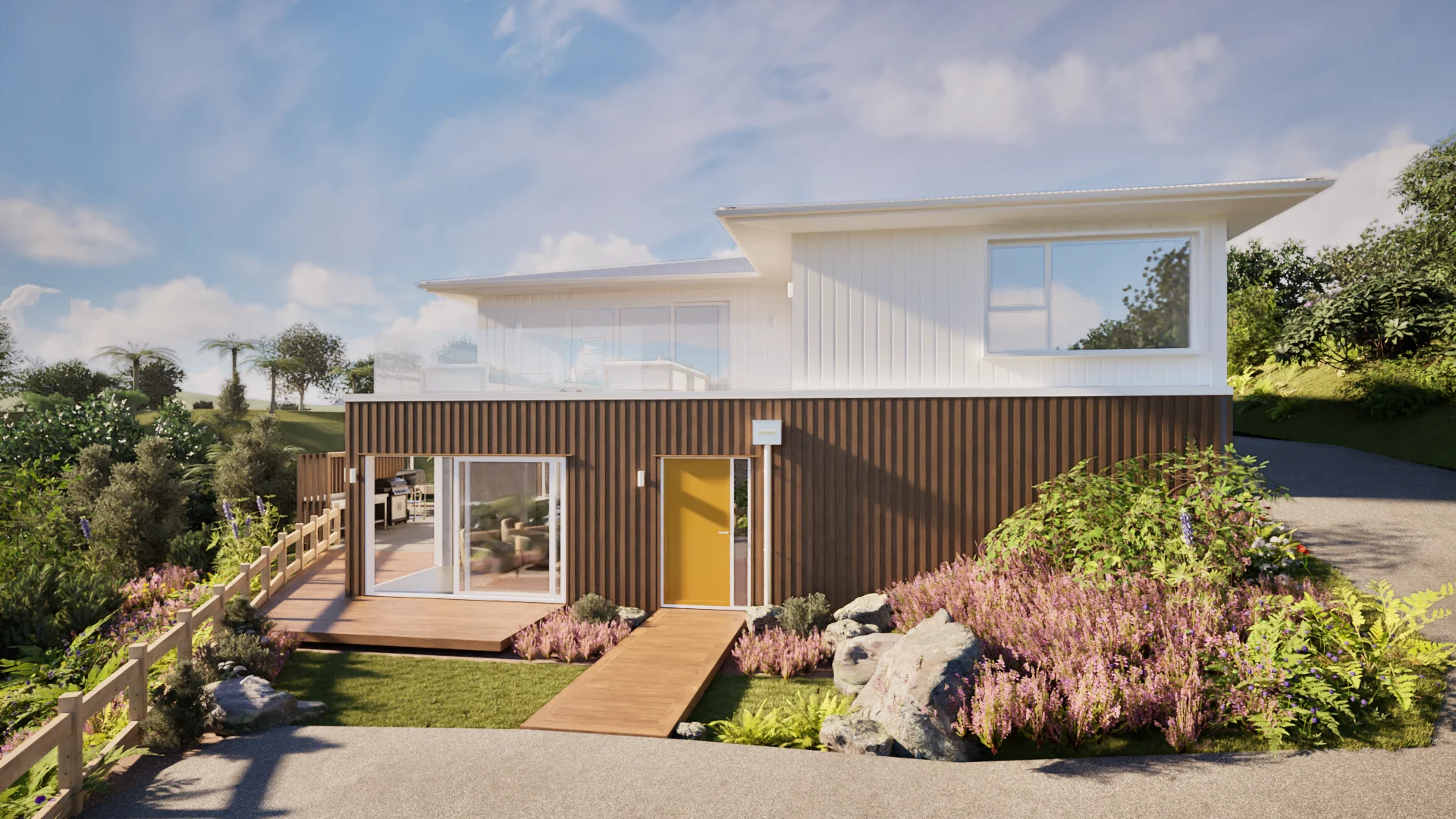
- Arcadia Series Summit — gable-form new build with a mezzanine, designed in partnership with Dufty + Co Builders.
Soils and foundations
Most of greater Rotorua sits on volcanic deposits — predominantly pumice. Pumice drains well and bears load reasonably, but settles unpredictably under concentrated loads, so pile foundations are common. A geotech report is the cheapest insurance for any new build of meaningful size, and that's what the calculator's geotech allowance reflects on local jobs.
A free start
If you're considering a property and aren't sure about its build potential, the cheapest possible insurance is a feasibility study — flat $500 + GST, written report, all the District Plan and overlay information pulled for the specific site. The kind of thing that's worth doing *before* you sign on a section, not after.
Frequently asked — Rotorua
- Are you a Rotorua-based architectural designer?
- Yes — Stoak Architecture is based in Rotorua. Daniel Stowe holds LBP Design 2 plus a Carpentry LBP. Site visits across the Rotorua district are part of the design process for any local project.
- Do you handle Rotorua geothermal-zone consents?
- Yes — geothermal-zone projects in Rotorua are part of the work. Under Plan Change 9 most types of buildings inside the Rotorua Geothermal System need a geothermal hazards assessment alongside the Building Consent (Rule NH-R8). Stoak's role on those projects is the central coordinator: knowing when to bring in the geothermal specialist, managing their quotes, lining up the assessment with the consent timing so the project moves forward as one piece rather than as separate parts. Clients get one point of contact, not three.
- Do you do lakefront work around Rotorua's lakes?
- Yes — and on every lake in the district. Lakefront sites fall under Lakes A Zone and related overlays in the District Plan, but the question of whether Resource Consent is needed varies more than it sounds. Building close to Mean High Water Mark is usually a trigger; an addition to an existing dwelling well back from the foreshore often isn't, and existing use rights may apply where a dwelling is already there. The right path through is site-specific, and finding the most practical and financially sensible one is part of the design work. Hamurana Road House is a real lakeside example — re-clad, ensuite, ground-floor extension with deck above.
- Are mature trees on my Rotorua section automatically protected?
- No — only trees specifically listed on the Council's Notable Trees Schedule (TREE-SCHED1) are protected, and that schedule covers about fifty entries dominated by public reserves, schools and institutional grounds. Standard residential suburbs aren't on it, so a homeowner's mature pohutukawa or rimu on a regular section is very unlikely to be scheduled. A LIM or Council's Notable Trees Overlay map confirms it for any specific site. Even where a tree isn't scheduled, designing around a feature tree is usually the right call.
- How long does a Building Consent take in Rotorua?
- Allow about a month for a simple, well-documented job; allow two months or more for anything complex. The 20-working-day statutory clock at Council pauses each time an RFI is issued and restarts when it's responded to, so calendar time can stretch well beyond 20 days even when both sides are moving promptly. The process exists for good reason, and a month or two of consenting on a home that will last fifty-plus years is a small share of the timeline. We guide clients through it; nothing about it is a surprise.
Got a Rotorua project?